
 Back to all posts
Retention starts before day one
Employee retention is often treated as something that begins after onboarding. By then, some of the most important decisions have already been made.
If the role was poorly defined, expectations were unclear, or the candidate was chosen mainly because they were available, the relationship starts on shaky ground. The same applies when the position described in the interview turns out to be very different from the job someone actually walks into.
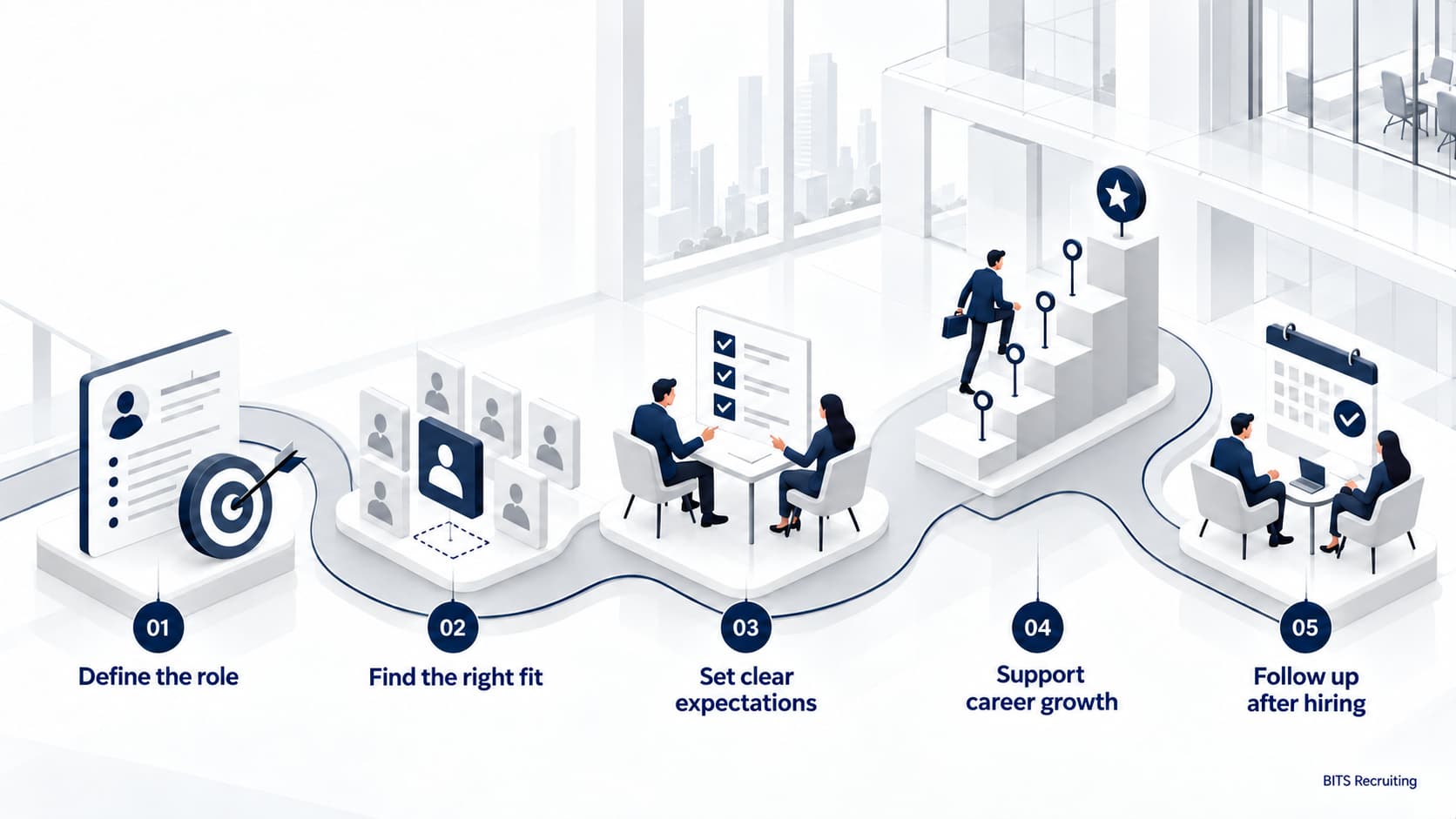
The better approach is to get clear about the role before the search starts. What does success look like six or twelve months from now? What kind of working environment is this? What skills are essential, and what can be learned?
Those questions may slow the first conversation down slightly. They can save a lot of time later.
Fit needs to go beyond the résumé
Skills matter. Of course they do. But the person who looks best on paper is not always the person who will work best within the team.
Work style, communication, pace, expectations, leadership environment, and career goals all influence whether someone settles into a role and stays there.
That is why BITS Recruiting does not approach professional hiring as a résumé-matching exercise. Our Professional Staffing process starts with understanding the business goals, team structure, and what success in the role should look like over the next 12 to 18 months. Candidates are then screened for technical depth, qualifications, communication, and how naturally they fit the working environment.
The aim is not simply to find someone who can take the job. It is to find someone who has a good reason to stay in it.
Be clear about what the opportunity really offers
Salary matters, but retention is rarely just a salary conversation. Candidates also want to understand where the role can take them. Will they learn? Will responsibilities grow? Is there room to progress? Does the organization actually support the kind of career they were told about during hiring?
Employers do not need to promise promotions that do not exist. In fact, they should not. They do need to be honest.
A realistic career conversation at the hiring stage is much more useful than an impressive pitch that falls apart six months later.
Hiring for the long term? See how BITS Recruiting approaches professional staffing.
Candidate experience does not stop when the offer is signed
A strong hiring process builds trust before someone joins. That trust can disappear surprisingly quickly if communication goes quiet after the offer or the first week feels disorganized.
We have written before about why good candidates drop out during the hiring process. Many of the same principles continue after acceptance: clear communication, realistic expectations, and a process that makes people feel like someone knows what is happening.
That is also why follow-up matters.
At BITS Recruiting, our involvement does not simply stop at the signed offer. Our professional staffing process includes coordination through interviews and offers, reference checks, and follow-up after the hire to help new employees integrate smoothly. A recruiter cannot control everything that happens after someone starts. But a good staffing partner can make sure the handover is not where the relationship disappears.
Long-term teams are built deliberately
Retention does not come from one policy, perk, or annual engagement survey.
It comes from a series of smaller decisions: defining the role properly, hiring someone whose goals align with it, setting realistic expectations, paying attention to career growth, and keeping communication clear once they join.
Building a team for the long term?

Key Takeaways
- Retention starts during recruitment, not after onboarding.
- Clear expectations and the right team fit can matter just as much as technical qualifications.
- Career growth remains an important reason Canadian employees consider leaving their jobs.
- Good hiring focuses on long-term alignment, not simply filling an immediate vacancy.
FAQs
Is employee retention mainly an HR responsibility?
No. Managers, recruiters, leadership, and HR all influence retention. The process begins with how the role is defined and communicated, then continues through onboarding, management, development, and the employee’s everyday experience.
Can a staffing agency really help improve retention?
A staffing partner cannot control the workplace after a hire, but it can improve the quality of the initial match. Understanding the role, screening beyond technical skills, setting realistic expectations, and following up after placement can all create a stronger starting point.
Does offering a higher salary always improve retention?
Not necessarily. Compensation needs to be competitive, but employees may leave for career growth, management, workload, flexibility, or a role that better fits their goals. Retention usually depends on the overall employment experience, not one number alone.
Together, we build success stories